


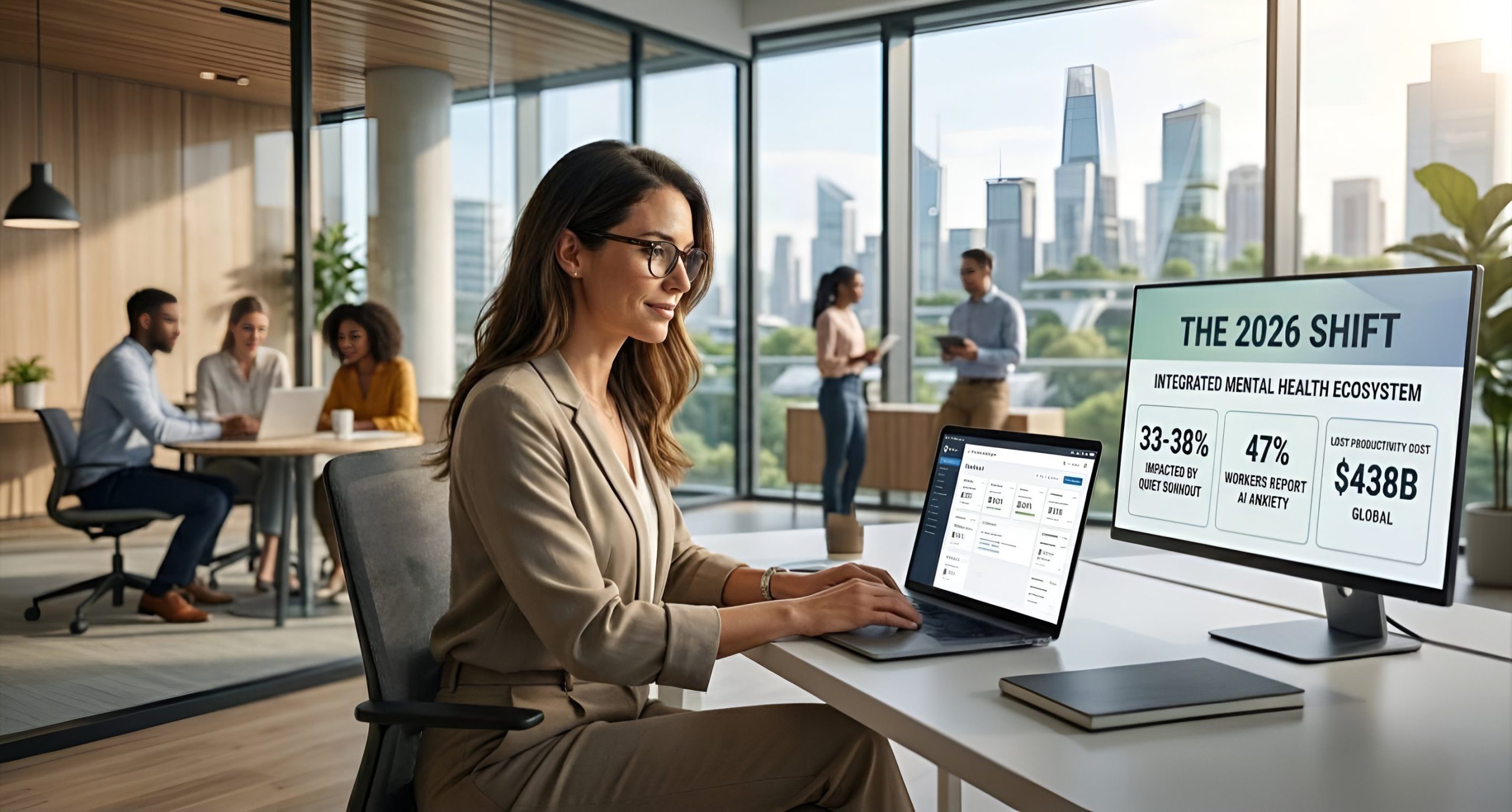

The 2026 Shift: From Perks to Infrastructure
As we move through the second quarter of 2026, the corporate world has undergone a fundamental structural change. The debate over remote versus office work has matured into a nuanced understanding of “cognitive logistics.” Mental health support is no longer viewed as a peripheral “perk” or a checkbox for HR; it has become a core component of organizational infrastructure. In this post-remote landscape, the frontier of workplace wellness is defined by the normalization of psychological safety and the integration of behavioral health into the daily flow of work.
The “proximity deficit” of the early 2020s has been replaced by a “connectivity mandate.” While flexibility remains the highest priority for the global workforce, the isolation and “quiet burnout” that characterized the remote-transition era have forced leaders to redesign the workplace as a source of community rather than just a site of production. In 2026, the most successful organizations are those that treat mental health hygiene with the same rigor they apply to physical safety and financial performance.
The Rise of the Integrated Mental Health Ecosystem
By April 2026, outdated Employee Assistance Programs (EAPs)—often criticized for their low utilization and reactive nature—have been largely replaced by Integrated Mental Health Ecosystems. These systems embed mental health support into the very core of business operations. They are proactive rather than reactive, focusing on “Continuous Care” models that offer support throughout an employee’s journey, not just during a crisis.
-
Behavioral Health Hacks: Remote and hybrid teams are now utilizing “digital nudges” and automated wellness checks integrated directly into collaboration tools like Slack or Teams. These tools suggest micro-breaks, prompt anonymous energy-level checks, and encourage asynchronous communication to reduce the cognitive load of constant video conferencing.
-
Preventive Infrastructure: Organizations are moving toward “Center-of-Excellence” designs for mental health, steering employees toward clinically validated digital tools, mindfulness resources, and peer-support networks. This integrated approach ensures that support is accessible, culturally relevant, and scientifically sound.
Combatting “Quiet Burnout” and the Proximity Deficit
One of the most significant challenges identified in 2026 is “quiet burnout”—a state where employees appear engaged and productive but are internally reaching exhaustion. Statistics show that roughly 33% to 38% of the workforce, with Gen Z being the most impacted, report symptoms of emotional detachment and motivational dips despite the flexibility of remote work.
To combat this, leadership training has shifted toward “Energy Management” rather than just “Time Management.” Managers are now equipped with the skills to ask about a team member’s energy and psychological bandwidth, not just their progress on deliverables. The “post-remote” world has necessitated a return to intentional proximity—not through forced office attendance, but through “purpose-driven collaboration.” Modern offices have been redesigned into collaboration hubs specifically for unscripted human interaction, which is essential for innovation and combatting the isolation that remote work can inadvertently foster.
AI Anxiety and the Future of Work Stress
As AI continues to reshape the industrial landscape in 2026, a new form of workplace stress has emerged: “AI Anxiety.” Recent surveys indicate that 47% of adults worry about their job security due to AI, and 13% of employees cite AI-related concerns as a primary driver of their burnout.
Forward-thinking companies are addressing this frontier by creating forums for discussing the impact of technology on roles. Transparency is the antidote to this specific stressor. Organizations that provide clear guardrails and show how AI can reduce workload—by handling repetitive tasks—rather than just increasing output are seeing higher levels of employee trust and resilience. Normalizing the conversation around AI’s role is a critical part of maintaining psychological safety in a tech-saturated environment.
Neurodiversity and Inclusive Accommodations
The normalization of workplace wellness in 2026 also includes a deeper commitment to neurodiversity. HR leaders now recognize that burnout for neurodivergent employees often stems from “masking” and sensory overload in poorly designed environments.
The post-remote world has allowed for a “Menu of Accommodations” that benefits the entire workforce. These include:
-
Quiet Zones: Dedicated spaces in hybrid offices for deep, focused work without sensory distractions.
-
Asynchronous Options: Validating written updates over live meetings to reduce social fatigue.
-
Alternative Communication Channels: Allowing employees to choose how they receive and process information based on their cognitive wiring.
By normalizing these accommodations, companies are tapping into latent talent and reducing the high cost of turnover among neurodivergent professionals.
The Economic Imperative: Measuring the ROI of Wellness
The shift toward workplace wellness is not just humanitarian; it is economic. In 2026, HR and finance leaders are aligning on shared metrics to measure the Return on Investment (ROI) of mental health initiatives. The cost of lost productivity due to poor mental health was estimated at $438 billion globally in the previous year, a figure that has driven the adoption of “Impact Metrics.”
Organizations are now tracking:
-
Reduced Absenteeism: Direct correlation between wellness support and fewer mental-health-related leaves.
-
Retention Rates: Employees who feel supported in their mental health are twice as likely to stay with their employer.
-
Total Cost of Care: Prioritizing prevention leads to lower healthcare claims and reduced long-term risk.
By treating mental health as a measurable business asset, companies are ensuring the sustainability of their wellness programs even in periods of economic volatility.
Normalizing the “Human-Centered” Workplace
The mental health frontier of 2026 is ultimately about the restoration of human connection in a digital age. The post-remote world has taught us that while we can work from anywhere, we cannot thrive in isolation. The screen was a bridge that carried us through a global crisis, but it is not a destination.
The path forward is a “hybrid of purpose,” where technology serves as the infrastructure and human well-being serves as the objective. By normalizing mental health discussions, implementing integrated support ecosystems, and redesigning the workplace for psychological safety, we are building a more resilient, innovative, and healthy global workforce. The future of work is not just about where we work, but how we feel while doing it.
Does this overview of the 2026 workplace wellness landscape cover the specific areas of organizational culture you were most interested in, or should we focus more on the technological tools used for remote monitoring?