


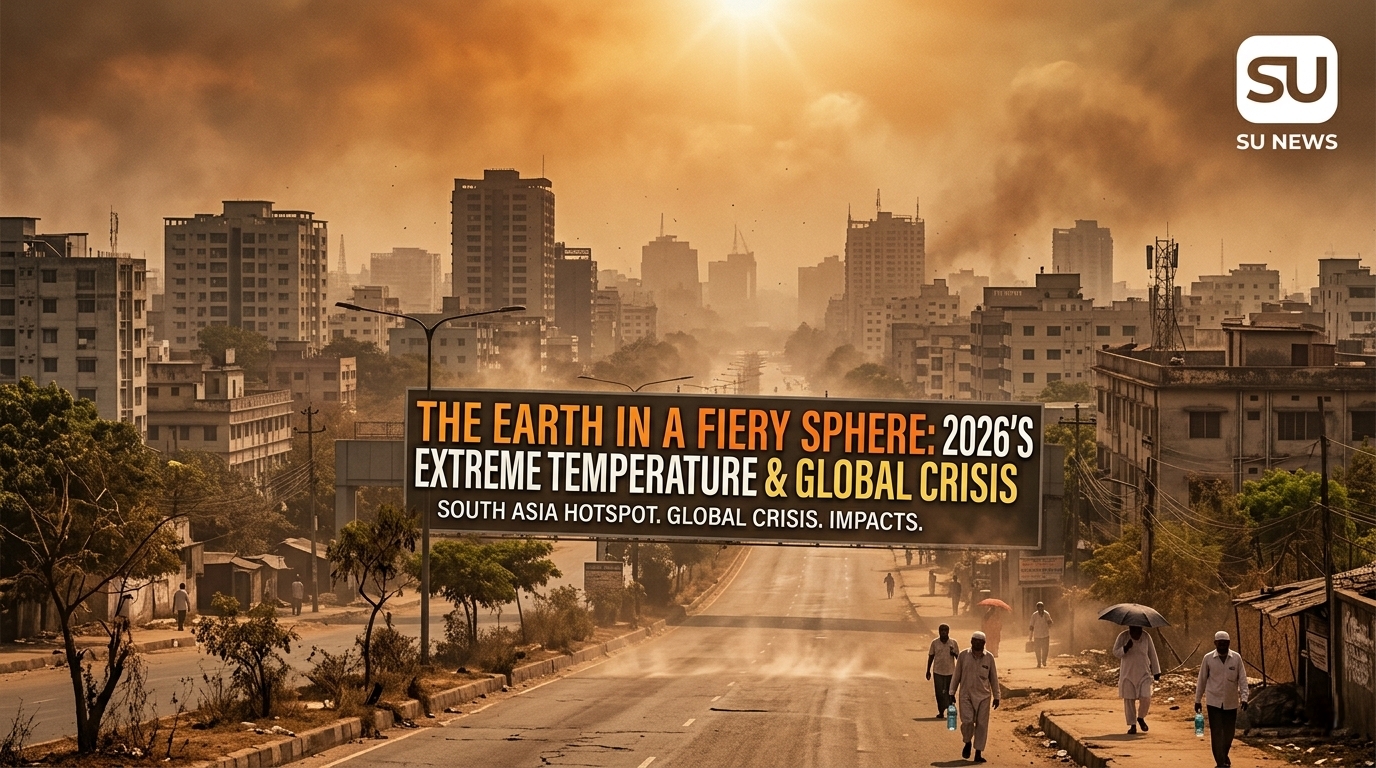

The Earth in a Fiery Sphere: 2026’s Extreme Temperature and Global Crisis
Standing in the current year of 2026, we are observing that heatwaves are no longer confined to specific seasons. Almost all countries in the world agreed to the 2015 Paris Agreement, which stated that global warming must be limited to below 2°C, and if possible, within 1.5°C. According to scientists, compared to pre-industrial times (1850-1900), the Earth’s average temperature is now close to crossing the dangerous limit of 1.5°C (Source: IPCC and WMO). As a result, the public life, economy, and ecosystem of the entire world are facing a terrible crisis.
1. Current Situation in the Context of 2026:
According to data from April and May, the influence of the El Niño cycle in the Pacific Ocean has decreased slightly, but the record of greenhouse gases in the atmosphere has increased, which is 1.55°C higher than pre-industrial times.
According to research published in the journal Nature Climate Change, about 30% of the current world’s population is exposed to this deadly temperature at least 20 days a year. Their same research states that if carbon emissions continue at the current rate, this number will stand at 74% by the year 2100. The main feature of this 2026 heatwave is ‘night-time heat’, meaning the temperature does not drop at night, which is depriving the human body of the natural opportunity to cool down.
2. Country-wise Problems:
The impact of extreme temperatures is not equal in all countries, but its severity is now everywhere.
A. South Asia (Bangladesh and India)
You can call Bangladesh and India the current ‘hotspots’ of heatwaves. According to the April 2026 report of the India Meteorological Department, about 95 cities in West Bengal, Bihar, and Uttar Pradesh of India have secured top positions in the list of 100 hottest places in the world. In Banda, Uttar Pradesh, the temperature was recorded at 47.4°C. On the other hand, the temperature in Asansol and Durgapur of West Bengal was above 43°C to 44°C. These are all data between April 20-26.
Severe heatwaves have been going on for the last few days in Rajshahi, Pabna, and Chuadanga of Bangladesh. According to BMD data, temperatures have been recorded between 39°C and 42°C in many places. Especially the western districts have been named as heatwave hotspots. According to the World Meteorological Organization and climate scientists, due to the influence of El Niño and human-made climate change, South Asia has now become one of the permanent hotspots for heatwaves. Due to high humidity, the ‘feels like’ temperature remains much higher. For example, in phone weather, we see the normal temperature is 30°C, but it shows ‘feels like’ around 33°C.
B. Middle East and North Africa:
We all more or less know how high the temperature is in countries like Saudi Arabia, UAE, and Kuwait. The fact that temperatures exceed 50°C in the Middle East and MENA countries is nothing new. The UAE’s National Center of Meteorology (NCM) regularly records temperatures in desert regions. Especially in the summers of 2024 and 25, temperatures were recorded above 50°C several times. On the other hand, the Mitribah region of Kuwait is established as one of the hottest places in the world. In 2016, 54°C was recorded here, and currently, in the summer months, the temperature is regularly staying around or above 50°C.
According to Algeria’s NMO data, temperatures in the cities of Adrar and In Salah exceed 50°C every day. In 2023 and 24, temperatures of more than 51°C were recorded here. On the other hand, in Tunis, the capital of Tunisia, a temperature of 48.9°C was recorded in 2021, which was a completely new record for that region.
C. Europe and North America:
Once-cool Europe is now burning in the heat of fire. Terrible wildfires are now a common issue in Spain, Greece, and Italy. On the other hand, thousands of people are dying due to the formation of a ‘Heat Dome’ in the western regions of America and Canada. In European countries where houses do not have AC, the death rate increases during heatwaves.
D. Australia and South America:
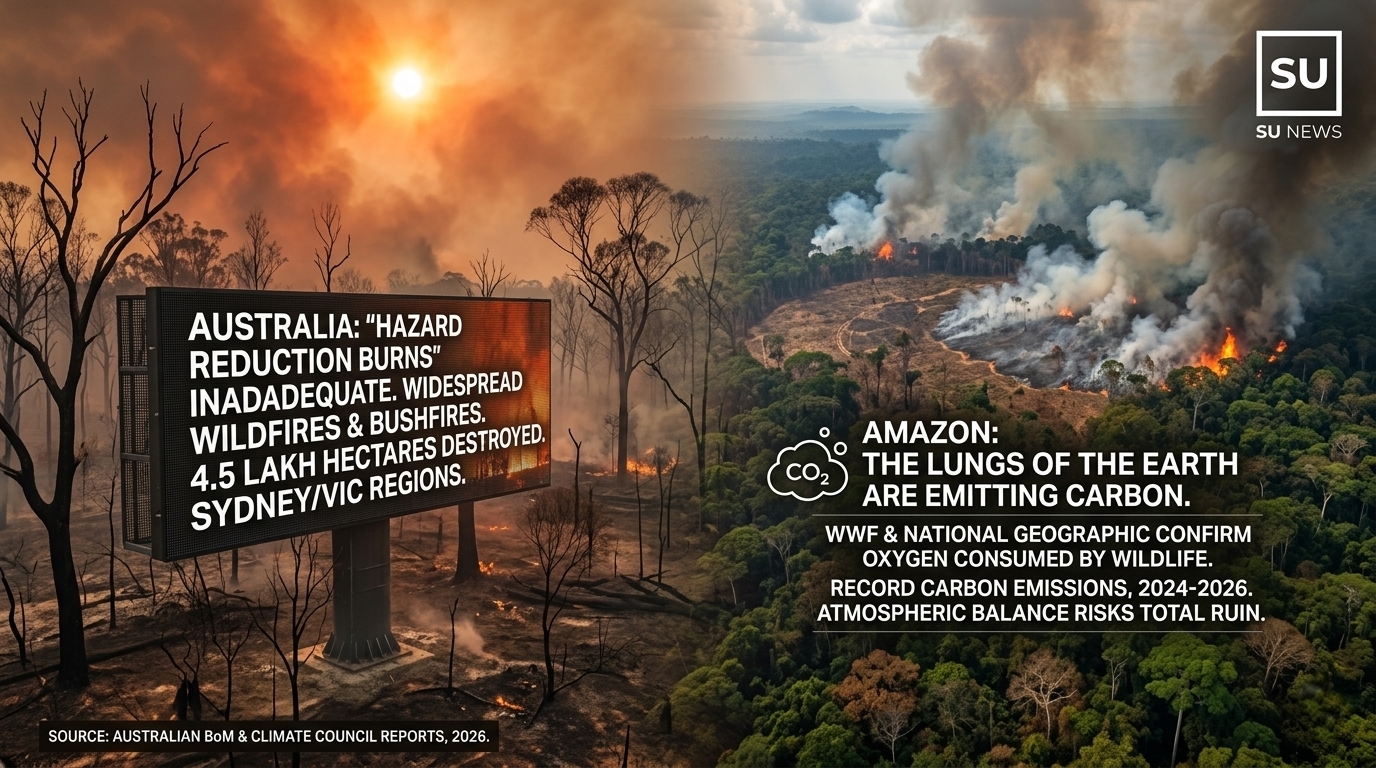
According to the Climate Council Australia report, January 2026 was one of the warmest months in history. Terrible wildfires and bushfires have been seen in Victoria and New South Wales, the areas around Sydney. According to the Australian Bureau of Meteorology (BoM), ‘Hazard Reduction Burns’ or controlled fires are currently being carried out in Sydney and its adjacent national parks so that the main wildfires do not spread. They have released records of about 450K hectares of land burning in Victoria in early 2026.
The Amazon, the lungs of the Earth, used to absorb carbon, but due to high temperatures and wildfires, it is now emitting carbon. According to Joint Research Centre 2025-26 data, a record amount of carbon dioxide was emitted from the 2024 wildfires. WWF and National Geographic have clarified that almost all the oxygen the Amazon produces is consumed again by its plants and animals. However, the real danger of the Amazon’s temperature rise is that if it is destroyed, the Earth’s carbon and water cycles will be ruined. This will indirectly destroy the balance of the entire Earth’s atmosphere.
3. Multifaceted Effects of Extreme Temperature:
4. Why This Abnormal Temperature?
There are mainly three major reasons responsible for this:
-
Excessive combustion of fossil fuels like coal, oil, and gas is increasing carbon dioxide in the atmosphere.
-
Trees absorb temperature and keep the environment cool, but due to cutting trees, forest land is decreasing, making the Earth directly heated.
-
Due to the increase in industrial areas instead of trees in urban areas, cities are transforming into heat islands.
5. Ways to Survive Heatwaves:
In this time of 2026, we must take some urgent steps to survive the excessive temperature and keep the Earth cool.
At the Personal Level:
-
The body must be covered in extreme heat and light-colored cotton clothes should be worn.
-
Drink plenty of water and more saline-based drinks.
-
Avoid the strong sunlight from 12 noon to 4 pm.
State and Global Level:
-
Greening must be done by planting plenty of trees in cities and making rooftop gardening mandatory for buildings.
-
Coal-based power plants must be closed, and the use of solar panels and wind energy must be increased so that renewable energy grows.
-
New buildings must be designed in a way that allows sufficient air circulation and reduces reliance on running AC. This will also make Smart System Design beautiful.
Personal Opinion:
This extreme temperature of 2026 is a severe warning for us. We must become conscious at this time; otherwise, we will have to suffer a lot in the future. Nature is losing its balance extensively, and ordinary people and other animals are paying the price for it. If we do not move forward right now to save the Earth by reducing carbon emissions, this heatwave will cross our limit of endurance. The Earth is not just a residence for us; it holds our existence. Therefore, leaving a cool and livable Earth for the next generation is a very big challenge for us now.