


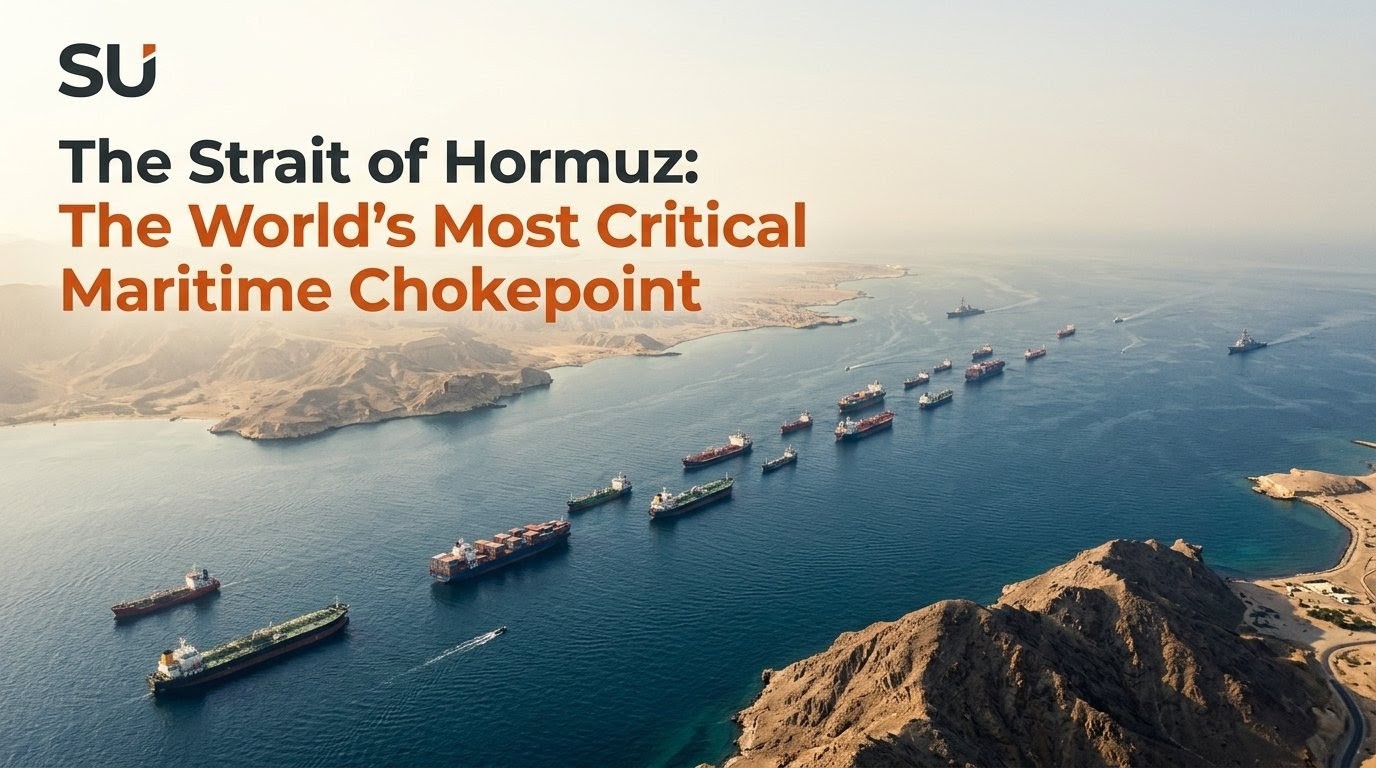

How the Strait of Hormuz Controls Global Oil Supply
Currently, one of the most discussed topics in the world is the Strait of Hormuz. This is a maritime route upon which the condition of many countries depends. Even three months ago, I didn’t know about this Strait of Hormuz, but now it is on everyone’s lips. So, I had the intention to write about it in detail. This Strait of Hormuz connects the Persian Gulf with the Gulf of Oman and the Arabian Sea. This narrow waterway serves as one of the main routes for the global energy market. Although it started from 2024, major political tensions regarding this place have begun from the end of 2025 or the beginning of 2026.
Geographical Location and Importance of the Strait of Hormuz
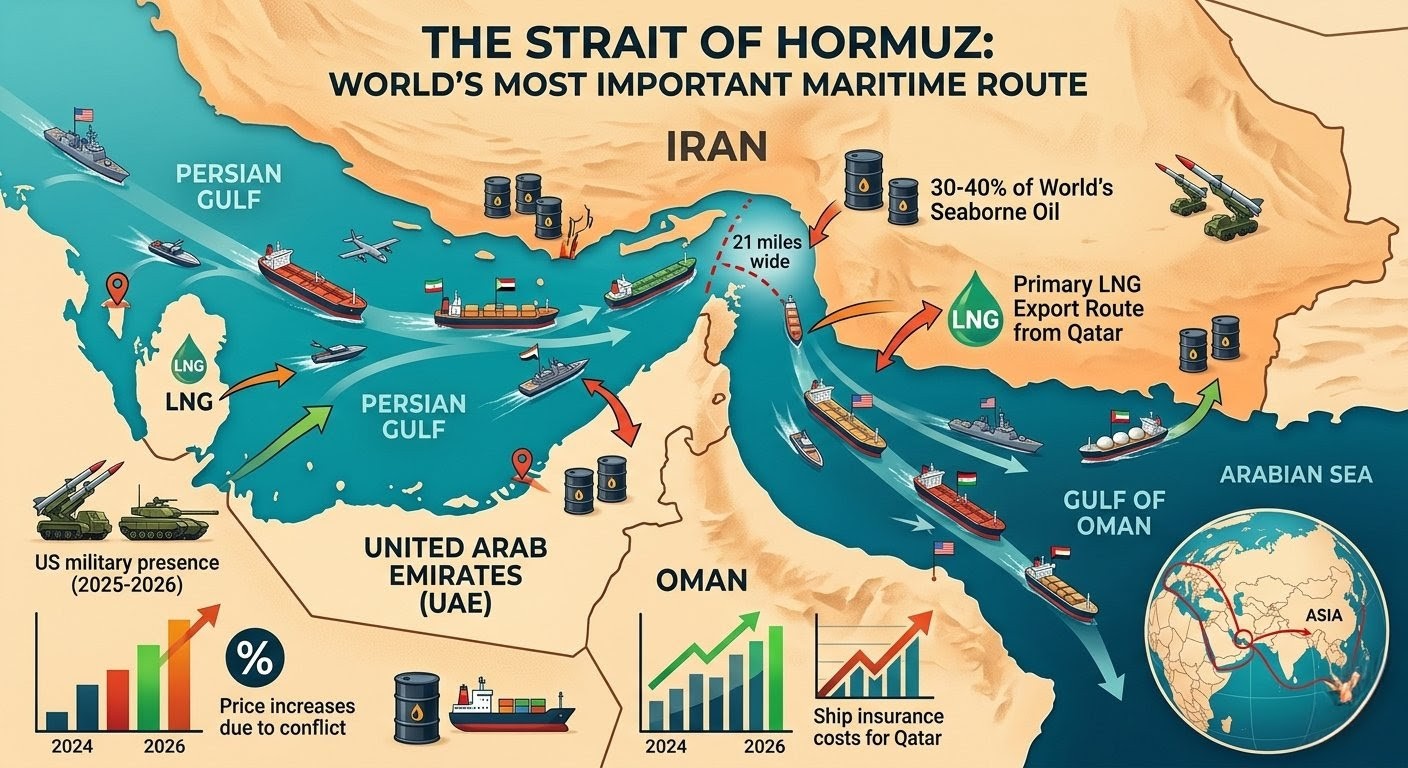
To the north of this sea route is Iran, and to the south are Oman and the United Arab Emirates. The narrowest part of the path is only 21 miles wide and is very complex for ship navigation.
1. Why it is important to the whole world:
-
About 30–40% of the world’s oil is transported by sea through this area every day (data from 2024–25) and that’s mean almost 21 million barrels pass through the Strait of Hormuz every day.
-
This is the main route for exporting LNG (gas) from Qatar.
-
If this path is closed, the global economy faces a huge shock and oil prices increase rapidly. For example, the price of oil in our Bangladesh has increased by 15-20 Taka per liter.
2. Important countries and their complex objectives:
Iran (The main controller)
-
They use this sea route as one of their key strengths.
-
If any sanctions are unfairly imposed on them, they create pressure through this route to get them lifted.
-
Their naval tankers always keep surveillance and if tolls are not correct or any problem occurs, they detain vessels.
United States (The security provider)
-
They want to develop their own country through Petrodollar and for that reason, they make ship movement safe here.
-
They keep the interests of their friendly countries intact, while also imposing various types of manipulations and false allegations.
Israel (The secret rival)
-
They carry out unfair secret operations against Iran.
-
They want to stop the supply of weapons and they are worried about Iran stockpiling uranium and moving towards nuclear power.
Other countries (Saudi Arabia, UAE, Qatar)
-
They want to keep everything balanced so that no problems come upon their countries.
-
Although there are some alternative paths, they are still very dependent on the Strait of Hormuz.
3. Recent Events (2023-2026)
2023:
-
Iran suddenly detains many oil tankers.
-
Right after that, the United States increases its military presence there.
2024:
-
Tensions begin to rise here along with the Gaza war in Palestine.
-
Iran detains many ships, including several cargo ships.
2025:
-
Almost the entire Strait of Hormuz begins to come under the control of the American military.
-
From then on, the United States starts moving ships under their security.
-
Among these, Iran and its rival countries increase the use of drones and new technology.
2026 (Current Situation):
-
The situation becomes very unstable, many countries fall under the scope of war, and Iran attacks and disables American bases in Middle Eastern countries.
-
For now, a ceasefire has been maintained through some agreements.
-
Iran has imposed taxes on many countries, and for that reason, oil prices are high.
-
Even due to small conflicts, oil prices can suddenly increase.
4. How is the threat created?
Actually, Iran does not need a large navy to close this Strait of Hormuz path. The reasons why they can do this:
-
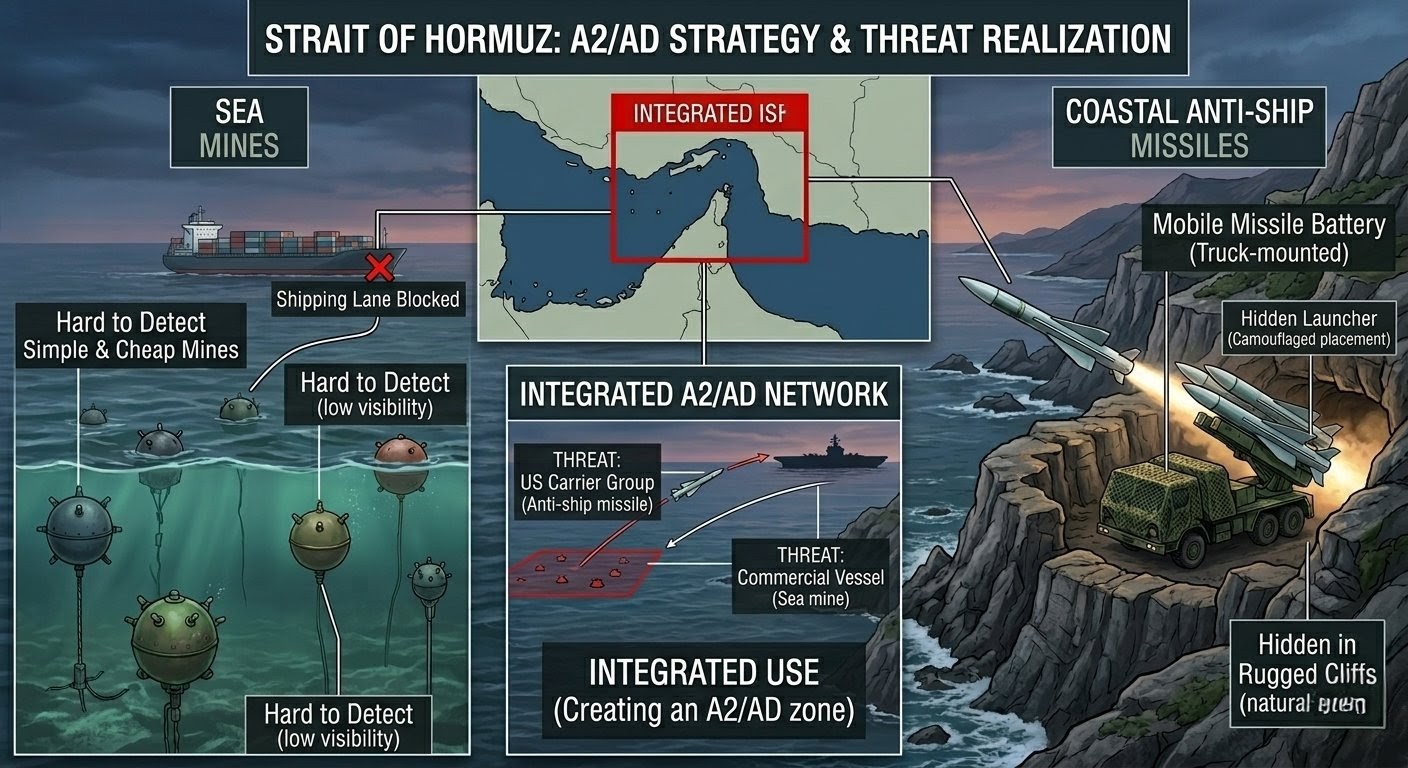
By using mines in the sea route.
-
By sending missiles from the coastal areas.
-
By attacking with many high-speed boats.
5. Economic impact on the entire world
-
Ship insurance costs have increased by almost more than 400 percent.
-
The usage rate of alternative paths (pipelines) has increased.
-
Asia and Europe’s inclination toward new energy is increasing.
6. Important concluding words
The Strait of Hormuz is a very necessary maritime route for the entire world; closing it is very difficult. Again, keeping it completely peaceful is also very difficult. And for Iran, this is the biggest source of power. The United States will always want to keep it open for its allies. Even then, it is very difficult to suppress Iran here, because even if Iran’s economic condition is miserable, they will never step back from protecting the Strait of Hormuz and their land. Currently, other countries are trying to handle the situation very calmly to avoid a major conflict.
According to international law, ships can move through this path. However, Iran does not want its enemy countries to take control of those ships. And the war and dispute are going on regarding this issue.
The Strait of Hormuz is as much an important sea route as it is an interesting topic. What do you think, will Iran make it easy in the future or sign a peace treaty with America or Israel?