


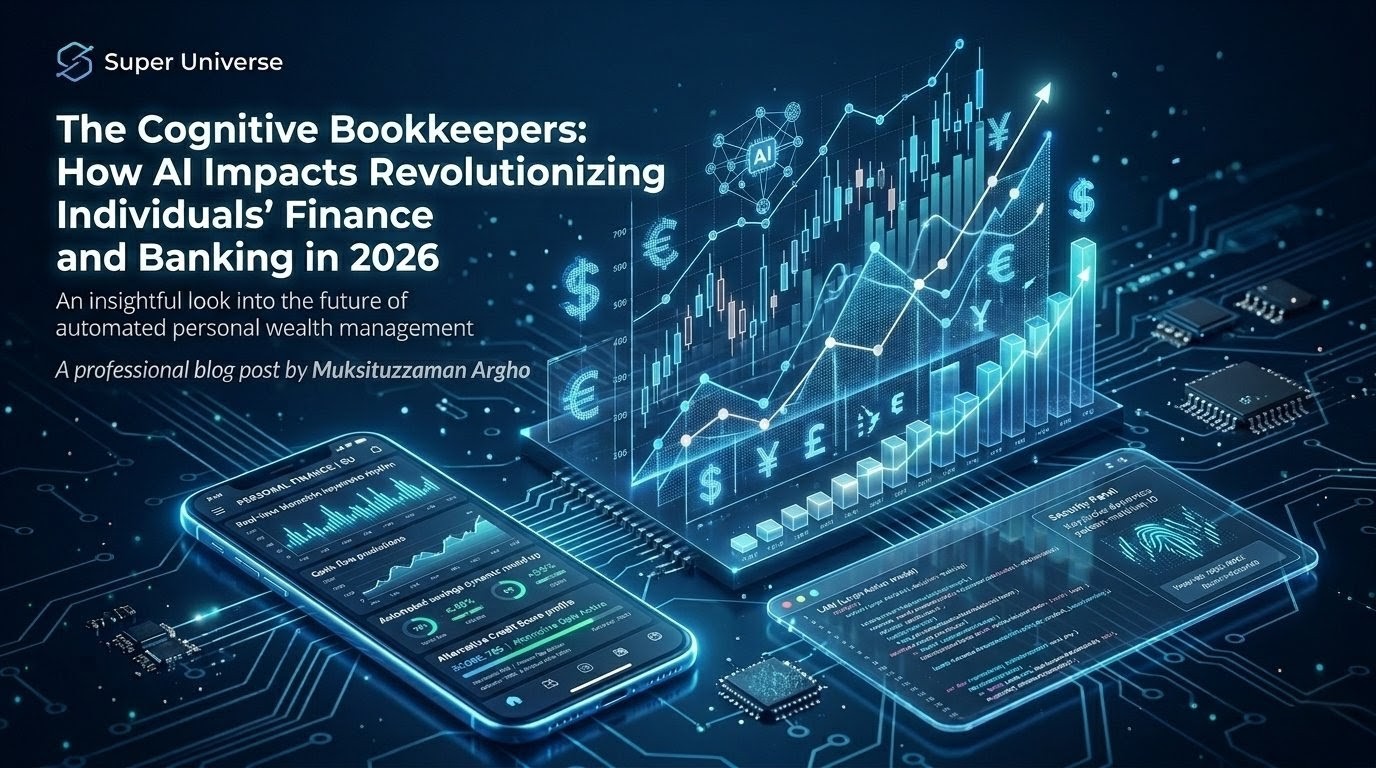

How AI Impacts Revolutionizing Individuals’ Finance and Banking in 2026
As of today, the “money-driven world” certainly depends on its technology-related tools and automated analysis methods. Manual ledgering seems almost gone by the time we live in this world, where the topmost priority and decisions are made by the collaboration between both Men and AI. So, Artificial Intelligence is no longer a fascinating concept for big corporations. From day-to-day transactions to budget evaluation, automated savings, algorithmic swaps, and investment strategies, either visible or invisible, no matter what, AI has become essential for managing and growing personal finances in 2026.
1. The Flourishment of Automated Intelligence in Personalized Financial Ecosystems
In 2026, Hyper-Personalized Finance (HPF) is a kind of app that will take out the boring spreadsheet method of cost tracking. Diverging from older software technology to the new version, which hardly classifies its expenditure after the occurrence. Nowadays, AI tools are predictive and preemptive.
Automated Budgeting and Intelligent Savings
Recent AI personal finance advisors—driven by Large Action Models (LAMs)—now operate their functions directly with your bank accounts to perform “transparent budgeting.”
-
Assumed Cash Flow: Collecting data from the last three years of our personal expenditures, AI can analyze efficiently to predict upcoming bills, even when they are irregular. It can also adapt to inflation, according to the increase in subscription fees and utility bills.
-
Autopiloting Micro-investment: Systems effectively treat “Dynamic Round-ups.” Instead of just rounding up to the nearest dollar, the AI identifies your daily usable income in real-time. In everyday human behavior, if someone chooses not to buy an expensive coffee, the AI catches a change in their daily routine pattern from their habits and automatically moves that “saved” amount into a profitable investment account.
-
Data-Driven Insights: Since the beginning of 2026, it has been observed that users who are using AI-powered automatic savings tools have seen their annual cash savings increase by 22% compared to their previous work budgets.
The Doomsday of the “One-Size-Fits-All” Credit Score
Previously, when people scaled finance in the same way, whether you were wise with money or not, they had the same approach for everything. That’s the “one-size-fits-all” credit score. But in the current era, times move fast forward, and AI is like a game-changer for everyone. It’s creating “Alternative Credit Scoring,“ which is like using many different approaches that are fully optimized by the expending habits of the user. Instead of just looking at your credit card history, it looks at other things that show you’re responsible. For example, whether you always pay your electricity bills on time, how much you earn from regular side jobs, and even factors like your education are considered. This helps those who haven’t used much debt or credit to get proper loans. And as a result, it makes getting necessary funds more accessible for millions of people.
2. Quantitative Trading: Leveling the Market for its players
In 2026, Algorithmic trading became one of the most substantial movements. There was a time when financial expertise revolved around certain people of Wall Street’s best analysts. They made all kinds of decisions based on the way they were trained. But real-time scenarios have been changing so rapidly that anyone can invest their money effectively and more efficiently with the help of AI, which may not completely replace experts, but surely helps them to have minimal knowledge in those particular fields and make a well-balanced market.
Harnessing Alternative Data
In 2026, investors are using multimodal AI to process “Alternative Data.” This includes:
-
Looking from the orbit: People can track down how crowded a parking lot or the traffic is in a particular shop using satellite images. This helps them to observe the amount of earnings they are generating.
-
Retailer’s Mood: Real-time social media and global news can affect or manipulate millions of dollars in trading and other sectors.
Benefits and Risks for the Retail Investor
While the advantages are clear, the risks in 2026 have evolved:
| Feature | Impact of AI in 2026 |
| Speed | Transactions occur in microseconds, capturing price inefficiencies. |
| Emotionless Execution | Eliminates “panic selling” and “FOMO buying,” sticking to a data-powered algorithm. |
| Risk of Flash Crashes | When multiple AI bots react to the same negative signal, it can cause rapid, localized market dips. |
| The “Black Box” Problem | Many retail investors use AI models they do not fully understand, leading to unexpected losses. |
Stat Check: In 2026, it is estimated that more than 75% of all retail trading volume on major global exchanges is initiated or assisted by AI-based algorithms.
3. Banking 4.0: Security and Experience in 2026
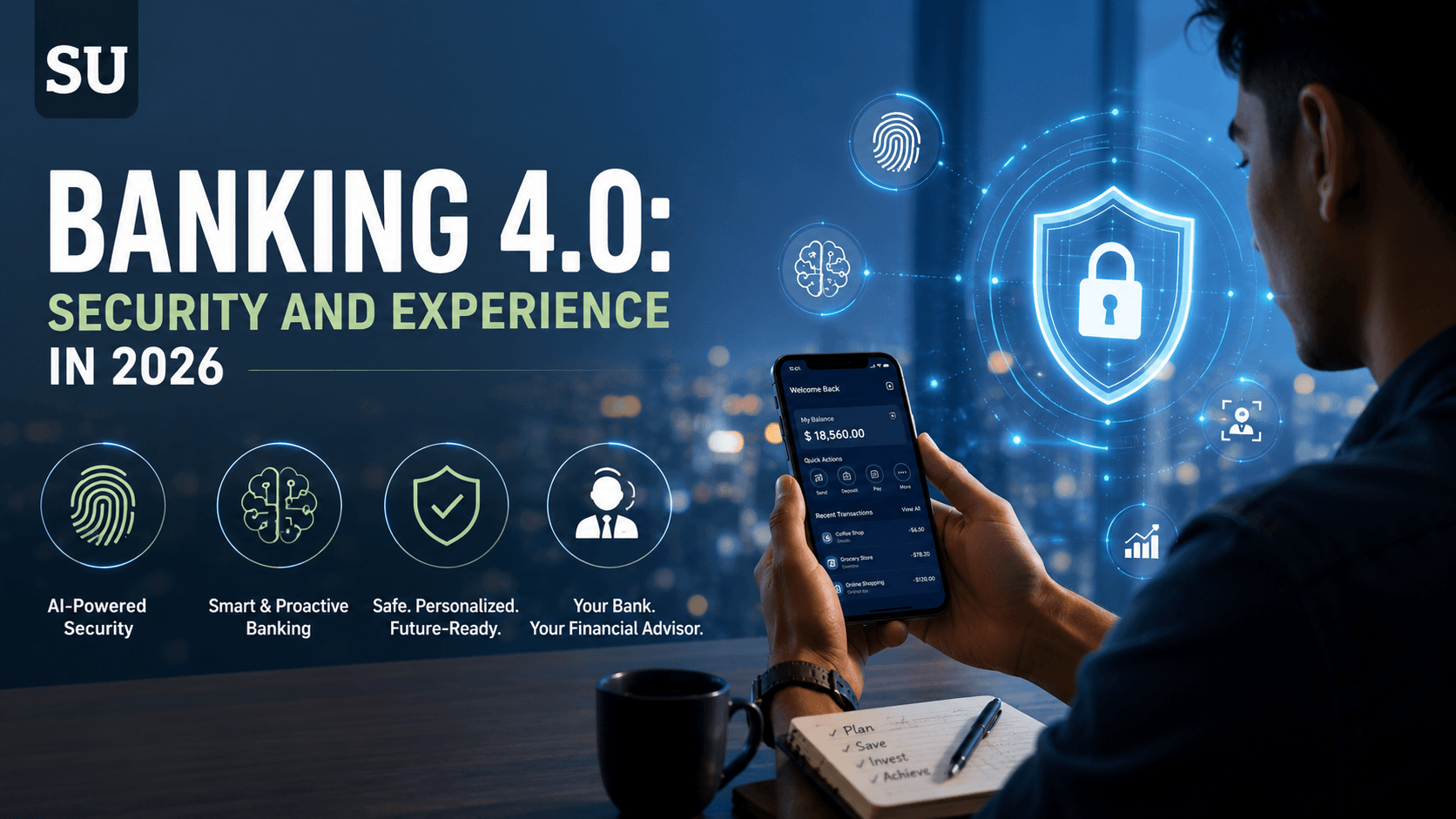
We are currently familiar with so many banking instruments that we use almost every day in our lives. E-Cash is one of them. The best examples of E-Cash are E-cheques, Debit cards, Credit cards, ATM cards, Master Cards, etc. The bank is no longer a place for customers to spend their precious time on normal drawing and sending money jobs. Within the reach of our palms, we can access these types of services.
Amplified Security through Behavioral Biometrics
Cybersecurity in 2026 has moved beyond passwords and even 2FA (Two-Factor Authentication). AI now observes Behavioral Biometrics to ensure account safety:
-
Keystroke Dynamics: To prevent disasters, AI analyzes the rhythm of a user’s phone; how hard one holds it, and “the typing cadence.” If it doesn’t match, then AI blocks the profile as soon as possible.
-
Act instantly: Current neural connections can catch fraudulent activity with almost 100% accuracy, blocking the exchange before the user gets notified of the probable crime.
Individualized Financial Counseling
A banking app can be proactive by suggesting specific aspects that might be truly helpful for a customer. Instead of the regular loan system, it can identify your problem and send you a notification, such as: “Considering your recent research, we can see that you are thinking about getting married. Congratulations in advance. Here are a few tips for you to catch up with this inflation forecast… I advise you to invest $500 in this short-term bond to cover your expectations.” Like sports coaches, we can find our banks acting as financial counselors.
4. Behavioral Thinking and the Humane Aspect
Questioning AI work ethics through the following integration is such a tough job to do:
-
Algorithmic Bias: AI may discriminate or become biased sometimes about a few decisions that can be really important for some loan applicants and a few other aspects.
-
Data Privacy: We share every data with AI nowadays. The question is about “Privacy and Convenience” coming upfront. The end-to-end data encryption is still a reliable method these days.
-
Demand for Human Supervision: Managing the big numbers may be the cup of tea for AI; however, “Human Supervision” is still very evident for complex estate planning, emotional support during market crashes, and high-level ethical decision-making.
Final Presumptions: What Does the Future Hold?
Learning the history of money management and adopting AI in our personal lives comes with its pros and cons, so that one can lessen their risk by managing AI tools and better insurance. However, Financial Literacy should be a common factor in order to get a successful and healthy cash flow. Utilizing its core and learning the root cause of wealth management-related issues will certainly help to grasp the true nature of a market.
Notable Ideas for 2026:
-
Adjusting soon: With the aid of AI, investors can increase up to 20%+ growth in savings efficiency.
-
Stay up-to-date: Learning algorithmic trading can be tiresome, but it eventually pays off through different parameters.
-
Verify Security: Ensuring the security of financial-based institutions where they effectively monitor AI-based Behavioral biometrics to protect customers’ best interests.
Disclaimer: This article is for informational purposes only and does not constitute formal financial, investment, or legal advice. Readers should consult with a certified financial professional before making any financial decisions.