


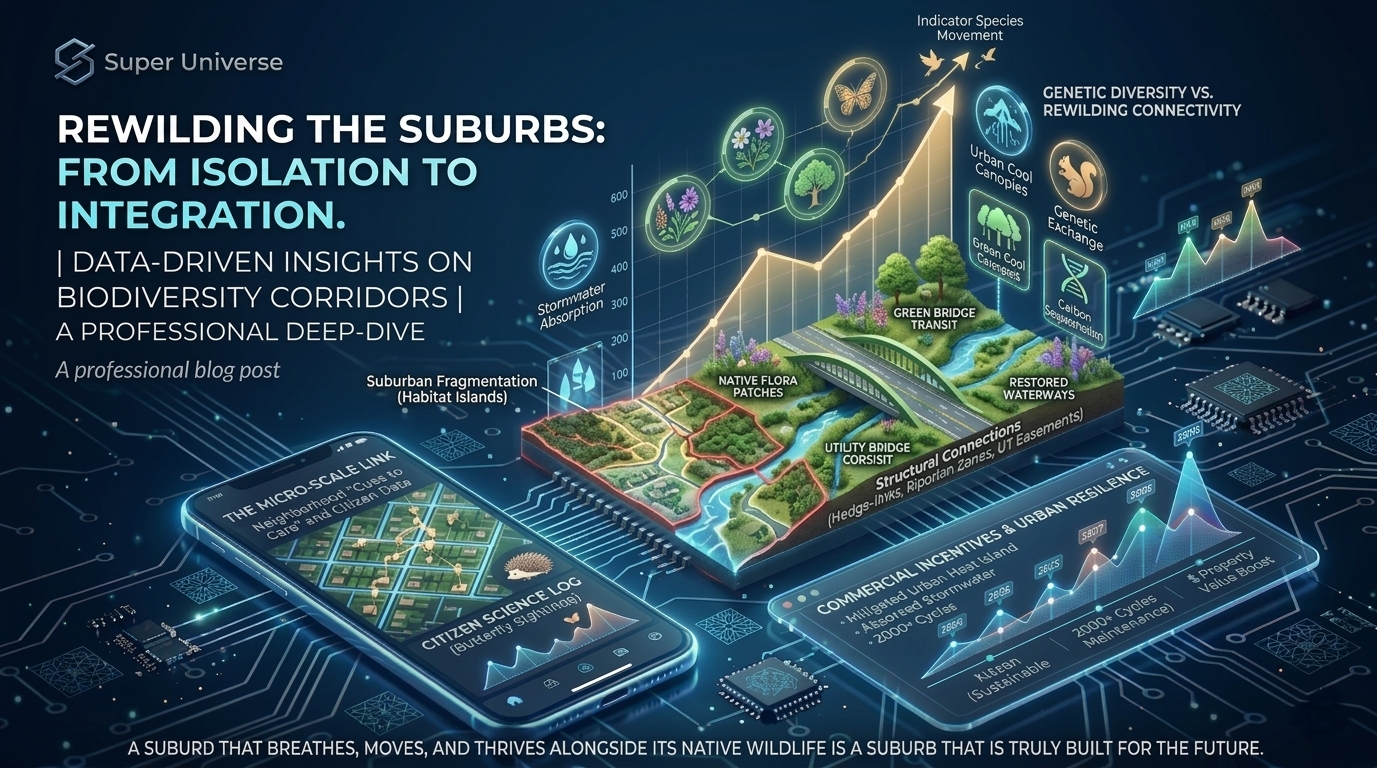

The Crisis of Urban Fragmentation
For the better part of a century, suburban development has followed a predictable and ecologically destructive pattern. Low-density housing, sprawling lawns, and rigid grid systems have carved up the natural landscape into isolated fragments. This process, known as habitat fragmentation, is one of the leading drivers of local extinction. When a forest or wetland is replaced by a housing development, the remaining green spaces often become “islands”—small, disconnected patches of nature where wildlife is trapped.
In these isolated pockets, species struggle to find enough food, search for mates, or migrate in response to seasonal changes. Genetic diversity plummets because populations cannot intermix, leaving them vulnerable to disease and environmental shifts. As our cities expand, the “grey” infrastructure of roads and concrete acts as a barrier that traditional landscaping fails to bridge. However, a revolutionary shift in urban planning is gaining momentum: rewilding the suburbs through the implementation of biodiversity corridors. These are not merely aesthetic additions to a neighborhood; they are essential lifelines designed to stitch the fractured landscape back together.
Defining the Biodiversity Corridor
A biodiversity corridor is a structural or functional connection that allows plants and animals to move between larger areas of intact habitat. In a suburban context, this doesn’t necessarily mean turning every backyard into a wild jungle. Instead, it involves the strategic placement of native vegetation, “green” bridges, and restored waterways that act as a transit system for nature. These corridors can range from large-scale wildlife overpasses that cross major highways to “stepping stone” corridors made up of a network of native-planted gardens and community parks.
The core philosophy of a biodiversity corridor is connectivity. By ensuring that a pollinator can travel from one park to another without crossing a desert of mown grass and pesticides, planners can maintain the ecological integrity of an entire region. These corridors provide the “highways” for genes, seeds, and individuals to move, ensuring that suburban environments contribute to, rather than detract from, regional biodiversity.
The Economic and Social Incentives for Rewilding
While the biological benefits of rewilding are clear, the economic arguments are equally compelling for local governments and developers. Traditional suburban landscaping—characterized by vast, thirsty lawns—is incredibly expensive to maintain. It requires massive amounts of water, chemical fertilizers, and labor. In contrast, rewilded corridors utilizing native species are largely self-sustaining once established. They are adapted to the local climate and soil, requiring significantly less intervention.
Furthermore, biodiversity corridors provide critical “ecosystem services” that protect property values. They act as natural sponges, absorbing stormwater and reducing the risk of local flooding, which is becoming increasingly common in over-developed areas. Vegetation also mitigates the “urban heat island” effect; a suburban street lined with a dense, biodiverse canopy can be several degrees cooler than one dominated by asphalt and mown grass. From a social perspective, access to “wild” green spaces has been scientifically proven to reduce stress, improve mental health, and foster a sense of community among residents who share these common natural assets.
Strategies for Implementing Corridors in Existing Suburbs
The greatest challenge for future urban planning is not building new “green” cities from scratch, but retrofitting our existing suburban sprawl. This requires a multi-tiered strategy that involves both public policy and individual action. One of the most effective methods is the “softening” of riparian zones—the areas alongside streams and creeks. In many suburbs, these waterways were previously encased in concrete pipes or channeled into straight ditches. Rewilding these areas by removing concrete and planting native reeds and trees creates an instant, high-traffic corridor for birds, amphibians, and mammals.
Another strategy is the transformation of utility easements. The vast stretches of land under power lines or above buried pipelines are often kept as barren, mown strips. By working with utility companies to plant these areas with native wildflowers and low-growing shrubs, planners can create hundreds of miles of pollinator highways with minimal disruption to existing infrastructure. On a micro-level, local ordinances can be adjusted to encourage “hedge-linking,” where residents are incentivized to plant native hedgerows instead of installing solid fences, allowing small mammals like hedgehogs or squirrels to move freely between yards.
The Role of Native Flora in Urban Resilience
A corridor is only as effective as the plants that inhabit it. For a biodiversity corridor to function, it must prioritize native flora over ornamental, non-native species. Native plants have co-evolved with local wildlife for millennia; they provide the specific types of nectar, pollen, and shelter that local insects and birds require. When a suburb is “rewilded” with indigenous oaks, milkweeds, or local grasses, it supports a complex food web that an exotic manicured garden cannot.
This focus on native plants also builds urban resilience against climate change. Indigenous species are typically more drought-tolerant and resistant to local pests. By creating a diverse mosaic of local plant life, urban planners ensure that if one species is hit by a new disease or a freak weather event, the entire corridor doesn’t collapse. This botanical diversity acts as a form of biological insurance for the city, maintaining air purification and carbon sequestration services even under environmental pressure.
Technology and Data-Driven Design
Modern rewilding efforts are being guided by sophisticated technology. Urban planners are now using Geographic Information Systems (GIS) and satellite imagery to identify “bottlenecks” where wildlife movement is restricted. By mapping the movement patterns of indicator species—such as specific bird types or small mammals—planners can determine exactly where a new green bridge or a “stepping stone” park will have the greatest impact.
Citizen science also plays a massive role in the success of these corridors. Apps that allow residents to log sightings of flora and fauna provide real-time data on how effective a corridor is. If a rare butterfly is spotted in a newly rewilded community garden, it serves as proof of concept, encouraging further investment. This data-driven approach moves rewilding away from guesswork and into the realm of precision engineering, where every tree planted is a calculated move toward a more connected ecosystem.
Navigating Challenges and Public Perception
Transitioning to a rewilded model is not without its hurdles. There is often a cultural attachment to the “neatness” of a traditional lawn, and some residents may fear that rewilded areas will attract “pests” or look unkempt. Overcoming these barriers requires education and thoughtful design. “Cues to care”—such as mown edges along wilder paths or informative signage—can help residents understand that the “messy” appearance of a wildflower meadow is actually a sign of a healthy, functioning ecosystem.
Public safety is another consideration. Corridors must be designed to ensure they don’t create blind spots for traffic or interfere with visibility in residential areas. However, when done correctly, these spaces become the pride of a neighborhood. They offer opportunities for “nature-play” for children and provide a living classroom for local schools. The goal is to move from a mindset of “controlling” nature to one of “coexisting” with it.
The Future of the Connected Suburb
As we look toward the middle of the 21st century, the definition of a successful suburb is changing. It is no longer enough for a neighborhood to be quiet and safe; it must also be ecologically functional. The rewilding movement represents a maturation of urban planning, acknowledging that humans are not separate from the natural world but are a part of it.
By prioritizing biodiversity corridors, we can transform our suburbs from ecological dead zones into vibrant, carbon-capturing, life-sustaining landscapes. This shift doesn’t require us to abandon the comforts of suburban life; it simply asks us to share the space. A suburb that breathes, moves, and thrives alongside its native wildlife is a suburb that is truly built for the future. The Blue Carbon Race and the Circularity Shift find their terrestrial counterpart in the Rewilding movement—all parts of a global transition toward a world where our built environment supports the life that sustains us.