


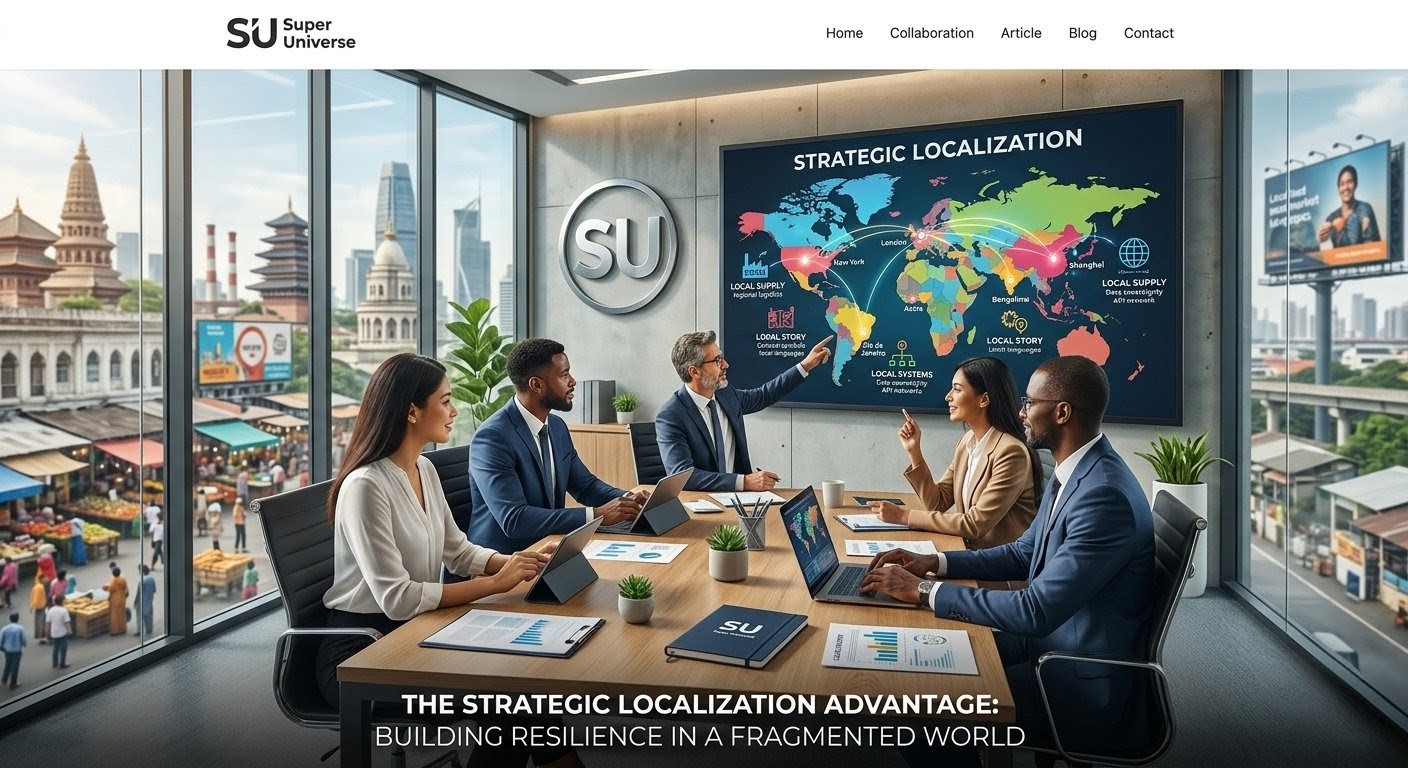

The global economic landscape has undergone a seismic shift. For decades, the mantra of “globalization” focused on the hyper-efficiency of supply chains, the pursuit of the lowest labor costs, and the seamless movement of goods across borders. However, as we move through 2026, that era of smooth, unfettered trade has given way to a new reality: geo-economic fragmentation. Rising protectionism, volatile logistics, and a surge in regional cultural self-confidence have turned the old playbook upside down. In this fragmented world, “Strategic Localization” has emerged as the essential framework for building resilience, shifting from a mere marketing tactic to a fundamental operating system for modern enterprise.
The End of Global Standardization
In the traditional globalized model, companies aimed for “economies of scale” by standardizing products and processes across the world. The goal was to make a brand look, feel, and operate identically from New York to New Delhi. While this approach maximized margins during stable times, it created massive vulnerabilities that were exposed by recent global shocks.
Strategic localization acknowledges that the “global mega-market” is fracturing into regional blocs. These blocs are defined not just by geography, but by specific regulatory environments, data privacy laws, and trade alliances. Businesses that cling to a one-size-fits-all strategy find themselves slow to react to local disruptions and disconnected from the specific needs of their regional customers. Resilience today is found in diversity—of supply, of narrative, and of systems.
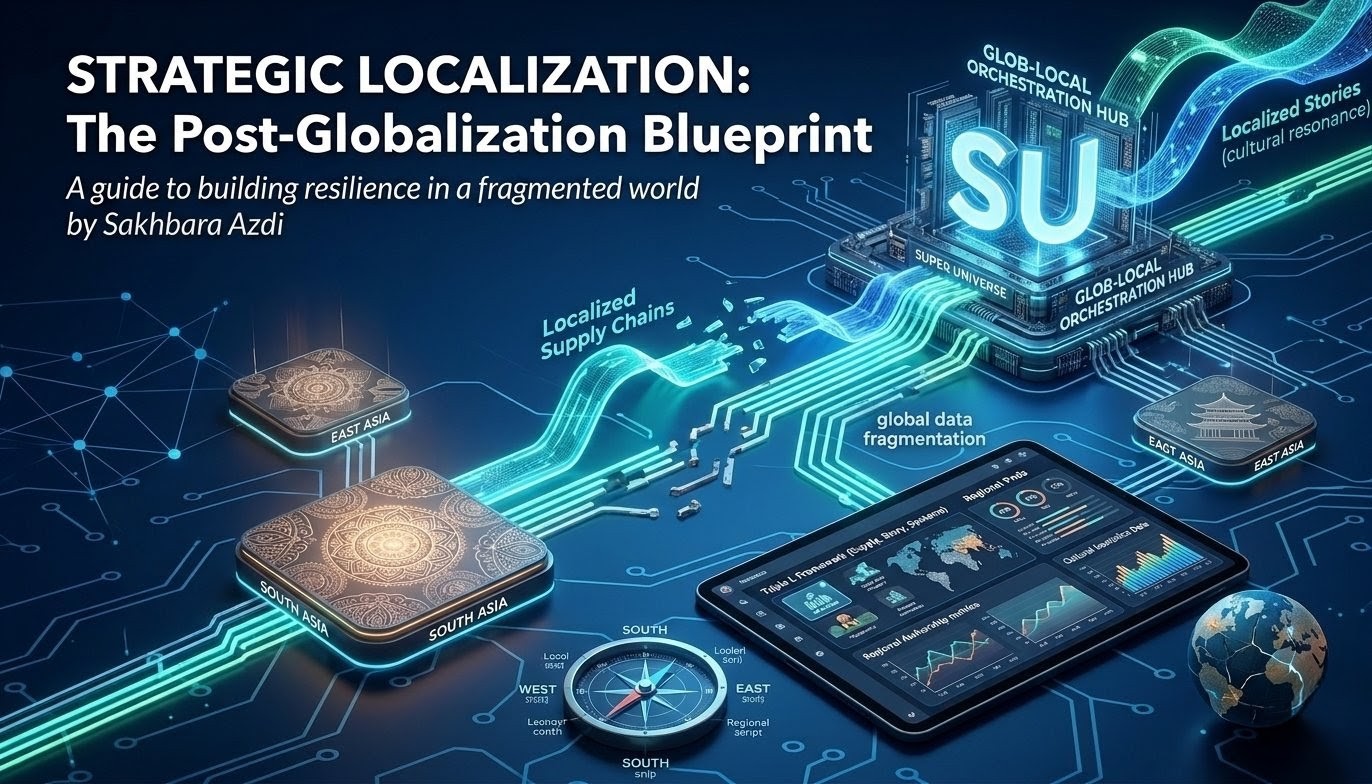
The Triple L Framework: Supply, Story, and Systems
To navigate this complexity, organizations are adopting a holistic approach to localization, often categorized into three interdependent lenses: Local Supply, Local Story, and Local Systems.
Local Supply is about moving away from “just-in-time” global logistics toward “just-in-case” regional resilience. This involves decentralizing production and sourcing materials closer to the end consumer. By building “local-for-local” configurations, firms reduce their exposure to shipping bottlenecks, currency fluctuations, and geopolitical tariffs. This regionalized footprint acts as a shock absorber, allowing a company to remain operational in one region even if another part of the world is experiencing a crisis.
Local Story refers to the cultural and emotional resonance of a brand. In a fragmented web, global broadcast marketing is losing its impact. Consumers are increasingly drawn to brands that demonstrate “regional authorship”—those that understand local idioms, traditions, and values. This isn’t just about translating a slogan; it’s about co-creating products with local communities and reflecting their specific aesthetic and social priorities.
Local Systems involve the underlying digital and legal infrastructure. As nations implement stricter data sovereignty laws and unique digital regulations, companies must build modular systems that can adapt to local rules without breaking the global core. This means regionalizing data lakes, ensuring API readiness for local payment ecosystems, and maintaining compliance with a patchwork of international laws.
Localization as Political Risk Insurance
One of the most significant advantages of strategic localization is its role as a form of “political risk insurance.” When a company deeply embeds itself into a local economy—by creating jobs, using local materials, and fostering regional partnerships—it builds “social license.”
In many parts of the world, large multinational corporations are viewed with skepticism. However, a localized entity that is perceived as a contributor to national or regional prosperity is far more likely to receive policy stability and community support. By localizing ownership and decision-making, companies move from being “foreign entities” to becoming “local stakeholders,” which provides a critical layer of protection in an era of increasing nationalism.
The Rise of “Globo-Local” Orchestration
Building a localized strategy does not mean abandoning the benefits of global scale. Instead, it leads to a “hub-and-pod” structure. The global center provides the scale, funding, and high-level R&D, while local “pods” are given the autonomy to innovate, design, and procure based on regional realities.
This shift requires a change in governance. Centralized “approval chains” are being replaced by “co-creation nodes.” This allows for much higher agility. When a local team doesn’t have to wait for a headquarters ten time zones away to approve a minor change in design or a new supplier contract, the entire organization becomes more responsive to market shifts.
Data Sovereignty and Digital Fragmentation
The digital world is no longer a single, open frontier. We are seeing the rise of the “splinternet,” where different regions have vastly different rules about how data is handled and how AI can be deployed. Strategic localization means treating these regulations not as compliance chores, but as strategic enablers.
By building regional data infrastructures, companies can achieve faster processing speeds (edge computing) and higher levels of consumer trust. Customers are more likely to engage with digital services when they know their personal information is being managed according to local standards and kept within their own borders. In 2026, data localization is a key competitive differentiator for any tech-enabled business.
The ROI of Resilience
There is an inherent cost to localization. Duplicating supply chains and creating region-specific products is more expensive than mass-producing a single item in a high-volume factory. However, the “Return on Resilience” (ROR) is becoming easier to quantify.
Forward-thinking firms now apply a “value-at-risk” lens to their operations. They measure the cost of localization against the potential loss of entire markets during a trade war or a pandemic. When seen through this prism, the incremental cost of complexity is a small price to pay for the ability to survive and thrive during periods of high volatility. Econometric modeling suggests that localized firms often see a revenue lift that far outweighs the added operational costs, driven by higher customer loyalty and fewer supply-driven stockouts.
Environmental Sustainability through Proximity
Strategic localization also aligns perfectly with modern sustainability goals. By reducing the physical distance that raw materials and finished goods must travel, companies significantly lower their carbon footprints.
“Local sourcing” is no longer just a buzzword for artisanal shops; it is a massive industrial trend. Large-scale manufacturers are discovering that minimizing long-haul shipping and utilizing local recycling ecosystems helps them meet strict environmental regulations and appeals to the “green” consumer. Localization is, quite literally, a shorter path to a sustainable future.
The Individual and the Localized Career
This shift also impacts the global workforce. The “Reskilling War” is increasingly fought on local ground. There is a growing demand for “cultural translators”—professionals who understand global business standards but possess deep, native knowledge of regional markets. Career success in 2026 often depends on one’s ability to navigate these local nuances, making regional expertise as valuable as technical proficiency.
Developing Cultural Literacy as a Core Competency
For leaders, the fragmentation of the world demands a higher level of cultural literacy. Understanding semiotics, local rituals, and regional sentiment is now just as important as analyzing market share or financial statements. Decisions are no longer made purely on spreadsheets; they are made through the lens of local relevance.
This requires a move from “fixed templates” to “adaptive toolkits.” Headquarters must provide the tools, but local managers must be the ones to build the house. This empowers regional teams and ensures that the brand remains vibrant and relevant in every corner of the world.
Conclusion: Rooted but Reaching
Strategic localization is not a retreat from the world; it is a more sophisticated way of engaging with it. It is how globalization survives in a fractured age—by becoming smaller, smarter, and more rooted in place.
The businesses that thrive in the coming years will be those that embrace this “multipolar” reality. They will be the brands that mean something different in every market while maintaining a core sense of purpose. In a world that is pulling apart, the most resilient organizations are those that know how to tie themselves deeply into the local soil. The future belongs to the “adaptive global brand”—an entity that is globally connected but locally indispensable.